
Local Government:
Cincinnati, OhioProject :
Municipal Landfill Solar ProjectCategory:
Off-Site Physical PPAProject Purpose
To install 9.8 MW of solar on a closed landfill to reactivate a long-neglected site and advance the City’s clean energy and operational goals.
Project Overview
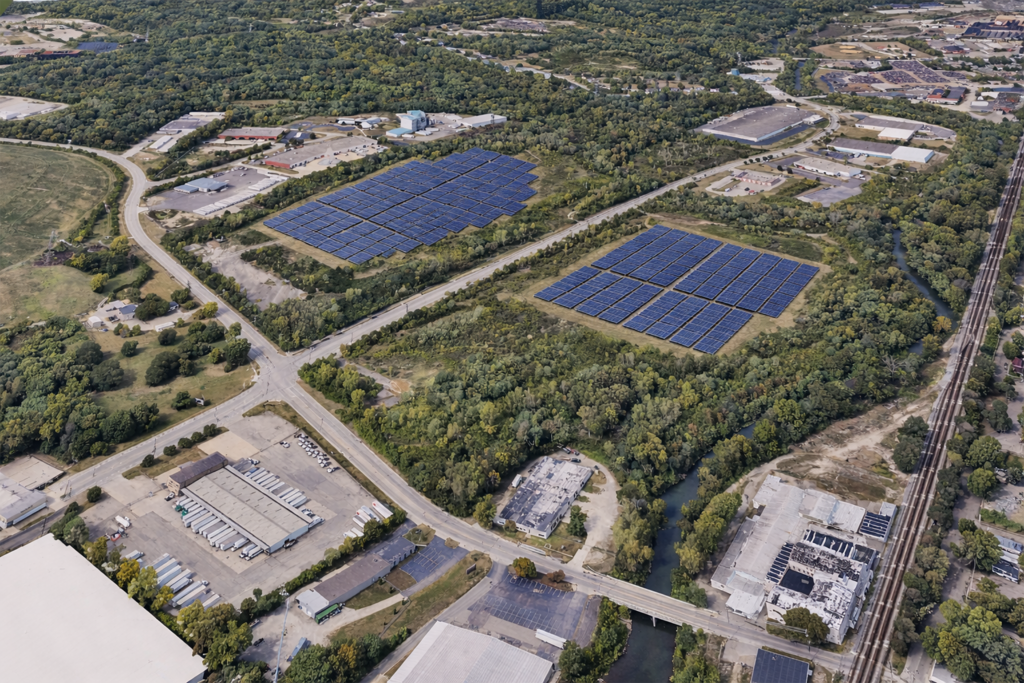
The City of Cincinnati is transforming the long-closed Center Hill Landfill into a utility-scale solar installation. This project will deliver clean, cost-effective electricity for municipal operations while reactivating a site that posed environmental, economic, and community challenges for decades. Located in the Winton Hills neighborhood, the landfill has had limited activity and reuse options since closing in 1976.
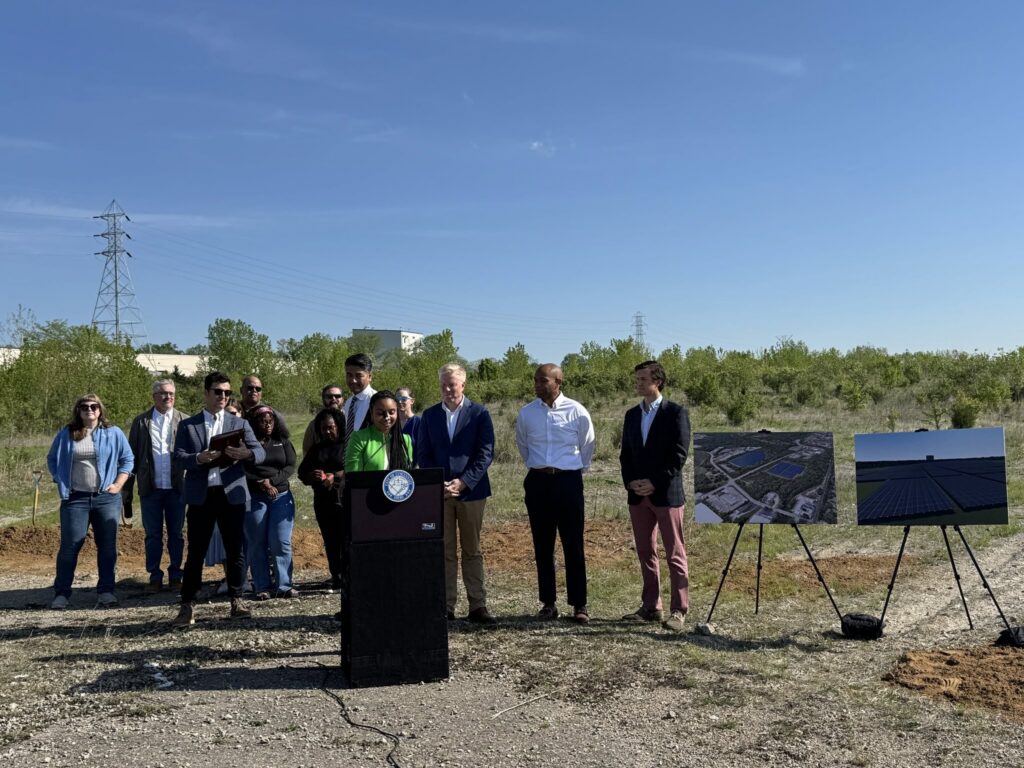
The $25.3 million solar array is expected to generate enough electricity to offset roughly 1,700 homes’ worth of annual energy use, with power dedicated to city facilities. By repurposing a brownfield site and leveraging a multi-pronged financing structure, Cincinnati advanced its clean energy and sustainability goals while stabilizing long-term energy costs. The project broke ground in April and is expected to be operational by early 2027.
This project is particularly notable because the City lost $10 million in previously awarded US EPA Solar for All funding in summer 2025 and had to adapt to changing federal regulations in the middle of negotiations. Once built, this will be the 2nd largest landfill solar project in Ohio (second only to Columbus, OH) and 13th largest in the country
How was the deal structured?
Integral to the success of the project are the split ownership and financing structures. Half the project will be owned by the City and paid for using municipal bonds. The other half will be owned by the developer, UPower Energy, and structured as a power purchase agreement (PPA) with the option for the City to buy out the project in year six.
Ultimately, the hybrid approach enabled the City to balance risk and estimated financial return to move forward despite the loss of a sizable federal grant.
The hybrid ownership approach enables the City to capture multiple benefits:
- Lower risk exposure: A municipally-owned solar project and fixed energy pricing for the PPA means that the City is less vulnerable to rising electricity prices and energy market volatility that can result from external forces outside of its control.
- Strong long-term economics: The project is expected to achieve a 15–17 year payback period with a net present value of the savings of $3.54 million over 25 years.
- Federal tax credit capture: With both structures, the City will receive the federal clean energy investment tax credit (ITC). For the part of the project that the City owns, it will use direct pay to claim the tax credit payment. For the PPA, the price builds in the ITC that the developer will receive.
What were Cincinnati’s biggest challenges in setting up this project?
The City navigated significant federal policy changes and related solar market volatility throughout project development. These included the termination of the Solar for All program, updated federal “commence construction” guidance issued in August 2025, evolving Domestic Content and Foreign Entity of Concern (FEOC) requirements that took effect at the end of 2025, and multiple tariffs. Not only did the federal government cancel the $10 million Solar for All award the City had already received, but it also accelerated the phaseout of the clean energy tax credits the project was planning to utilize.
The loss of Solar for All funding fundamentally changed the project’s economics and required the City to rethink both its project design and financing strategy. Originally, the City aimed to use the funding to develop a community solar program on the closed landfill that would provide discounted electricity rates for low-income residents. By the time the funding was rescinded, however, the City had already selected a developer and invested significant time and resources into project planning. Rather than abandon the project entirely, City staff worked with Rocky Mountain Institute’s (RMI) Brightfields Accelerator to evaluate alternative structures that served Cincinnati’s goals to salvage the broader landfill solar project.
Without the grant funding, optimizing the financing structure became essential to keeping the project financially viable. At the same time, City staff recognized that owning half of the array could deliver greater long-term value than just a straight PPA because the City could finance the project at a lower cost of capital and did not need to generate a profit. Demonstrating that this hybrid ownership structure would reduce long-term electricity costs and create long-term savings for taxpayers became critical to moving the project forward.
The changing federal landscape also meaningfully compressed the project’s timeline. To preserve eligibility for enhanced clean energy tax credits and reduce financial risk, the City executed both the PPA and direct ownership agreements in December 2025, enabling construction to begin before the end of the year and secure the 50% federal investment tax cre
How did the City build internal support for the project?
Key to getting the project across the finish line was building City leadership confidence that the project would remain financially beneficial despite changing federal policies and market trends.
City staff worked with technical partners, including RMI, to co-develop detailed financial projections across different ownership options. City leadership needed to understand how projected electricity prices compared with the proposed PPA price over time and to what extent municipal ownership would improve project economics. The analysis showed project savings based on different electricity cost projections, which allowed the City to consider varying levels of risk in their decision making. The analysis showed that the City’s lower cost of capital made direct ownership financially attractive and that combining ownership with a competitively priced PPA produced the strongest long-term value.
Rising electricity bills are no stranger to Cincinnati. In fact, the average Ohio electricity bill grew by more than 53% from June 2021 to June 2026. Rather than relying on assumptions about future electricity prices or estimates based on recent price increases, the City based its projections on documented, long-term historical trends. City staff conservatively assumed a 2% year over year increase in electricity rather than rely on speculative future market forecasts, helping demonstrate that the project’s financial case remained strong even under cautious scenarios. Using conservative assumptions helped increase confidence among decision makers and ensured the project could withstand changing market conditions.
What lessons can other cities learn from Cincinnati’s project?
Cincinnati’s experience offers several lessons for municipalities considering landfill solar and their local energy goals overall:
Creative procurement and deal structures matter.
- Creative procurement and ownership models can allow projects to move forward. Cincinnati’s June 2024 procurement allowed for three different project opportunities and welcomed proposals with financing structures ranging from city ownership to PPAs and other third-party financing structures. By combining multiple approaches into a one procurement effort, the City was able to review and evaluate aspects of a vendor’s response that spanned all three options once rather than reviewing responses for three separate RFPs. This approach also attracted a broader pool of developers, reduced administrative effort for both the City and prospective development partners, created opportunities for economies of scale, and offered a more complete understanding of the regional solar market.
- Additionally, as discussed above, Cincinnati’s hybrid ownership approach reduced the upfront cost of the project compared to full ownership while achieving greater long-term savings than a full PPA. The split ownership model, combined with a buyout option after year six for the PPA portion, is expected to generate more than $3.54 million in savings over the 25-year life of the project. Cincinnati also recommends working with developers to explore Green Banks and other sources of low-cost financing where available. Lower financing costs can meaningfully improve overall project economics and lead to more competitive pricing. This will be increasingly critical as federal policies and energy markets shift.
Closed landfills can be strategic assets.
- Closed landfills can support large-scale solar development with minimal community disruption and without competing with other land uses. Repurposing these sites can transform underutilized land into productive community assets that generate long-term value. Redevelopment decisions should consider the historic impacts that landfills and other infrastructure have had on surrounding communities. The Center Hill site was vacant for a long time, despite numerous attempts to reactivate the sites for new job opportunities.
- When reusing closed sites, cities should engage residents early and thoughtfully evaluate how projects can benefit the neighborhoods most affected by past land-use decisions. Of particular interest. The Center Hills landfill solar project will bring new economic activity to a neglected part of the Winton Hills Neighborhood.
Understand how pricing relates to all utility costs and your long-term electricity costs, not just the contract price.
- Cincinnati emphasized that cities should carefully evaluate how the project will be incorporated into their electric load and different components of your rate structure.
- Related, it is important to understand what your charges or fees the utility will include on your bill regardless of the electricity source and what charges are offset by a contracted solar project. A competitive PPA price alone does not necessarily translate into lower electricity costs if integration costs are overlooked.
How does this project fit into Cincinnati’s broader climate and community goals?
Cincinnati’s landfill solar project aligns with the City’s broader climate and energy goals under the Green Cincinnati Plan, which calls for deep greenhouse gas reductions and expanded renewable energy for municipal operations. In July 2017, City Council approved an updated Green Cincinnati Plan, first adopted in 2008. This plan was developed in partnership with government, corporate, academic, nonprofit, faith, and community organizations. It presents a comprehensive set of 80 recommended strategies—across energy, buildings, transportation, natural systems, and more—to advance a more sustainable, equitable, and resilient future for Cincinnati.
The City has also committed to 100% clean energy for City operations by 2035 and to achieving 100% carbon neutrality community-wide by 2050. City leaders have emphasized the importance of pairing climate action with fiscal responsibility and equitable outcomes, particularly when projects affect or can benefit historically disadvantaged neighborhoods and energy-burdened areas.
Large-scale solar on closed landfills fits squarely within this strategy: it allows the City to expand clean energy generation while avoiding conflicts over land use, protecting greenfield and agricultural land, and addressing long-neglected sites. The RFP for this project also sought responses for broader renewable energy solutions, including both renewable energy projects that were not on city-owned property and were in, adjacent to, or regionally close to the city. Cincinnati previously signed a large-scale, off-site PPA. In November 2019, Cincinnati Mayor John Cranley announced a signed deal with Creekwood Energy and Hecate Energy to build the 100 MW New Market Solar Farm to generate clean electricity for both City operations and residential customers.
Additional Resources
- 2019 Cincinnati Off-Site PPA
- Green Cincinnati Plan
- Cincinnati 2024 Solar RFP
- Cincinnati is turning a blighted former landfill into a solar energy hub
- Cincinnati to turn an old landfill site into a solar power producer