This RFP, issued by Rocky Mountain Institute (RMI) and Save the Children following Hurricane Maria, solicits proposals for solar-plus-storage microgrids at six public schools in Puerto Rico. The procurement includes engineering, procurement, and construction (EPC) services for resilient energy systems designed to support critical school operations during grid outages. Organizations interested in deploying resilient solar and storage projects at schools, community facilities, or emergency shelters can use this document as a reference for developing microgrid procurements, defining resilience requirements, incorporating battery storage, and structuring EPC solicitations for critical infrastructure.
Montgomery County Microgrids on County Facilities RFEP (2014)
This RFP from Montgomery County, Maryland sought public-private partners to develop, own, and operate microgrids on county facilities. The solicitation focused on improving resilience at critical public facilities through the deployment of distributed energy resources, including on-site generation, energy storage, and combined heat and power systems. The document provides an example of how local governments can procure microgrids and other distributed energy solutions through innovative public-private partnership models.
San Diego International Airport Request for Proposals for Batter Energy Storage Systems (2018)
RFP issued by the San Diego County Regional Airport Authority seeking a vendor to design, engineer, procure, install, operate, and maintain a battery energy storage system (BESS) at San Diego International Airport. The RFP outlines project requirements, evaluation criteria, contract terms, utility interconnection considerations, and opportunities to reduce electricity costs and demand charges through energy storage deployment.
National Grid: Request for Proposal for Non- Wires Alternative Solutions (2017)
This RFP solicits market-based non-wires alternative (NWA) solutions to address projected electric system constraints in Old Forge, New York. The document outlines project goals, evaluation criteria, and proposal requirements for distributed energy resources, demand response, energy efficiency, storage, and other alternatives that could defer or replace traditional transmission and distribution infrastructure investments. Cities and utilities can use this resource as an example of how to structure competitive solicitations for grid modernization and distributed energy solutions.
Local Governments Can Achieve Texas-Sized Impacts from Distributed Energy Assets and Virtual Power Plants
This report explores how local governments can leverage distributed energy resources and virtual power plants to enhance grid reliability, reduce energy costs, improve resilience, and support clean energy goals. The report highlights opportunities for cities to accelerate adoption through local policies, procurement, and program design.
Utilizing the Local Energy Action Framework (LEAF) to Prioritize Decarbonization Projects
While local governments across the United States have announced 100 percent renewable energy or carbon-neutrality goals for their operations, understanding what these goals entail and how they should prioritize various projects remains a challenge. While many energy models have been developed for utility resource planning, these frameworks are costly and more technical than most cities and counties need.
On-site Solar and Storage for Community Resilience Hubs RFP Template
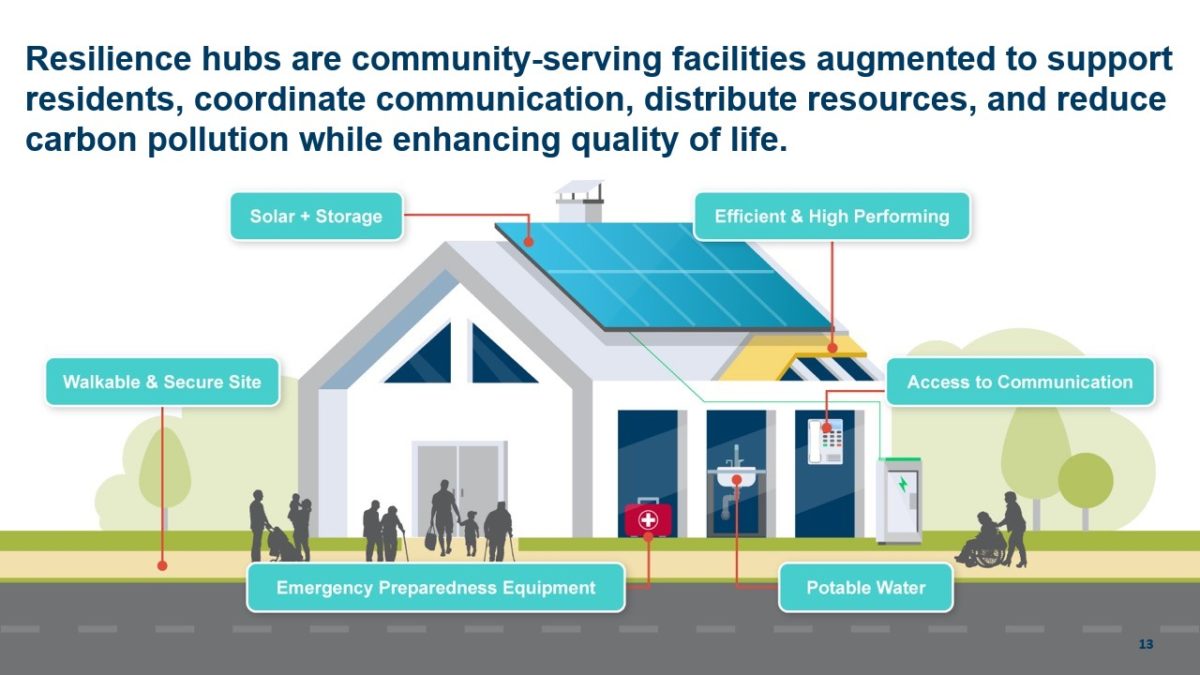
The goal of this document is to provide local governments with an easily modifiable template, including a suggested structure and example language, to use when developing their own on-site solar+storage request for proposal (RFP) for a community resilience hub. For cities and counties required to use their local government’s RFP template, the material in this template should be easily transferable to your city or county RFP template.
Community Solar+: How the Next Generation of Community Solar Can Unlock New Value Streams and Help Communities Pursue Holistic Decarbonization
RMI’s report introduces a vision for the next generation of community solar. Community Solar+ is a whole-systems approach to deliberately plan and deploy community solar projects to embrace added value streams, capture greater economies of scale, and advance additional community-wide sustainability and equity goals. Community Solar+ is a way to do more with less by designing projects to also help build out electric vehicle charging infrastructure, align the grid for an electrified future, mitigate urban heat island effects, and more. The report is targeted at state and local governments, utilities, developers, and community members.
PJM Cities and Communities Coalition Policy Statement on the Benefits of Reducing Barriers to Energy Storage in the PJM Region
PJMCCC statement on the importance of storage deployment in the PJM territory and its role in supporting renewable energy integration, resilience, equity, and clean energy job creation.
Solar and Storage for Cities
This resource focuses on two distinct applications for behind-the-meter solar-plus-storage installations at city/county facilities: 1) peak load shaving or peak demand shifting and 2) emergency power (resilience). It provides guidance for city staff to conduct an initial assessment and investigation of solar-plus-storage systems to determine suitable system size and performance information that could be incorporated into a planned PV procurement for a single city facility.